Aza Holmes and Davis Pickett’s relationship
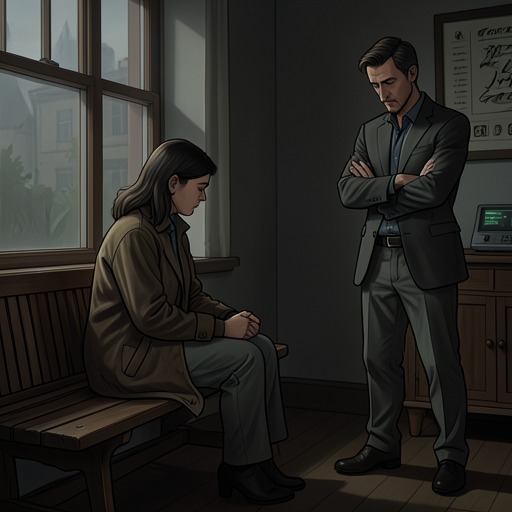
Turtles All the Way DownAza Holmes and Davis Pickett’s relationship is a story of recognition across time: two children who once watched the same sky grow close again amid a missing father, a large reward, and Aza’s difficulty inhabiting intimacy. Their romance never settles into a conventional partnership. Instead, it moves between shared silence and physical closeness, suspicion and trust, separation and an enduring affection that survives their last goodbye.
Childhood Recognition
Aza and Davis first knew one another through Camp Spero, which they called Sad Camp because it served children whose parents had died. They attended for two summers, after fifth and sixth grades. Aza remembers being eleven and carrying a vague, constant fear; she also remembers lying beside Davis on a dock, their legs dangling over the edge and their backs against the rough planks. They did not talk much or even look at each other. What mattered was that they looked at the same cloudless sky. Aza’s memory makes this quiet attention an early form of intimacy: being seen, in her account, is rarer than simply being looked at.
Their childhood connection also belonged to a sharply divided local landscape. During the school year, Davis lived just across the river from Aza. She and her mother lived on the bank that sometimes flooded, while the Pickett home’s stone-gabled walls pushed rising water toward their side. The contrast foreshadows the difference in their circumstances, but their childhood bond is not described as a negotiation of money or status. For Aza, it is preserved instead in the memory of a shared view.
Reunion and the Question of Money
The adult crisis that brings them together begins with a radio report: Russell Pickett has disappeared, and the Indianapolis Police Department is offering a $100,000 reward for information about his whereabouts. Aza corrects Daisy Ramirez’s assumption that she knows Davis in the present tense: she knew him. She doubts that he would remember her. Yet, when Davis later explains that his father’s name on the news reminded him of his own full name, Russell Davis Pickett, he says that this strange repetition made him think of Aza. He remembers her explanation that her mother chose her name so she could make the sound her own. Their reunion thus begins with each carrying a small but telling memory of the other.
The reward immediately complicates that recognition. Davis knows that old friends have begun contacting him because of his family’s money, and he does not know where his father is. When Aza cannot explain why she and Daisy came to see him, Daisy blurts out their real reason: they heard the report, and Aza had once had a crush on him. Her teasing turns the awkward visit into a comic story of childhood affection and a supposed shipwreck arranged to bring them together. But beneath the joke is a serious uncertainty about whether Aza’s interest is personal or driven by the reward.
Davis later tells Aza that he once believed no one should befriend someone merely for access to money or influence. In subsequent texts, he questions that rule, wondering whether wealth might simply be part of who he is. The exchange exposes the difficulty of separating Davis from the fortune surrounding him, even when he wants to be liked for himself. Aza’s presence cannot immediately resolve that anxiety, and his suspicion is not baseless: she knows about a night-vision photograph that could give investigators a time and place connected to his father’s disappearance.
When Aza tells Davis that the photograph does not establish where his father is, Davis explains why he has withheld it. He expects the police would ask why he did not turn it in, but he does not want his father on trial, and he does not want Noah Pickett to face the resulting attention at school. His father did not tell him he was leaving; Davis thinks he would not have stopped him if he had. Davis wants life to remain as it was, and his father’s continued absence feels closer to that than a public trial. He also understands that Aza cannot simply prove her motives to him. Rather than ask for silence without qualification, he offers her the $100,000 reward money as a test neither can fully settle: if she keeps calling or texting, he says, they will both know the connection is not only about money.
Aza takes the cash in a blue tote bag. Before meeting Daisy at Applebee’s, she sits in Harold with the bag, her father’s old phone, and its charger, and turns on the phone to look through its photographs. The phone has survived eight years since her father’s death; its pictures preserve the things he saw, especially Aza, her mother, and skies divided by branches. She tells her father that she has come into money, hopes to do right by it, and misses him. This moment places the new relationship beside Aza’s lasting bond with her dead father: the money is not just a plot device or a measure of Davis’s wealth, but something she must decide how to carry while living with her own forms of loss.
Closeness, Desire, and Difficulty
Aza and Davis’s closeness develops through conversation as much as through touch. Beneath the stars, Davis explains that starlight is light from the past. He reaches for Aza’s hand, and she takes it. The old light overhead gives their silence a shared subject, while Aza recognizes that she wants him but cannot easily disentangle the reasons for wanting anyone. Their conversations about the sky create a path toward intimacy without making that intimacy simple.
They do kiss, and Aza experiences real desire and pleasure in Davis’s body and in the warmth of his mouth. Yet physical closeness can also trigger her intrusive thoughts: during one kiss, she becomes acutely aware of his saliva and pulls away. The contrast matters. Her withdrawal does not cancel her attraction; it shows how the experience of wanting Davis can coexist with thoughts she does not want and cannot simply dismiss. In another scene, she initiates a kiss after listening to him talk about how life rhymes unpredictably. The impulse is immediate, and for a moment she no longer feels compelled to analyze why she wants him.
The intimacy remains uneven. At a movie, Aza reads Davis’s smile as an opening, leans across the armrest, and kisses him. She likes the kiss and wants the brain-fuzzing closeness she associates with their exchanges by text. Then the intrusive thoughts return, and she pulls away as subtly as possible. Elsewhere, she tells Davis she feels precarious and cannot date him—or anyone—despite liking him. He agrees that relationships demand too much attention to their own status. Their words establish a limit, but not a clean emotional resolution: affection remains while the capacity to sustain a relationship remains uncertain.
Separation and a Last Shared Sky
Aza eventually tells Davis that she cannot continue. She appreciates his texts and his patience, but she does not want him waiting for her to get better as though recovery will necessarily make a relationship possible. She describes her present condition as perhaps what better looks like for her. The statement is both a boundary and an acknowledgment that improvement does not promise a return to the version of intimacy Davis may be hoping for.
When they meet again, their conversation gradually takes the shape of catching up rather than sharing a life together. Aza realizes that whatever they were, they are no longer that. She texts him later, and his response makes their incompatibility explicit: he cannot be with her on the terms she can offer, just as she cannot manage the kind of relationship he wants. The breakup is not presented as a failure to care. It follows from a mismatch in what each can sustain.
Some time later, Davis comes to Aza’s house with a box. She calls him back and takes his hand, leading him into the backyard beneath the ash tree. They lie down and look at the sky through branches just beginning to leaf. Davis tells her that he and Noah are moving to Colorado: Noah has been accepted at a boarding school for troubled children, while Davis will finish high school at a public school. Their planned departure gives this meeting the weight of a farewell, but the shared sky recalls the childhood bond that preceded both romance and money.
Aza tells him she feels okay much of the time and that her visits to Dr. Karen Singh are now four weeks apart. Lying beside him, she feels the scale of the sky and understands something of what drew Davis to astronomy. She thinks that she may love him for the rest of her life. The feeling does not restore their relationship or guarantee that they will meet again; it registers what remains meaningful even as their lives diverge.
What Endures
The final goodbye leaves the relationship open in memory rather than in practical expectation. Aza imagines the life that the girl beneath that sky cannot yet know: recovery and relapse, children, work, a home, and a future in which Daisy Ramirez remains her best friend. The spiral painting in Davis’s box will follow her through later homes, a small object connecting this parting to a life that continues beyond it. In the present scene, Aza and Davis squeeze each other’s hands and look at the same sky before he says he has to go. Their repeated farewell carries the possibility of seeing one another again, but does not promise it.
That ending completes the relationship’s central pattern. Aza and Davis have repeatedly found closeness in what they can share without fully resolving what separates them: a childhood view of the sky, conversations about stars, a hand held under old light, and finally a night beneath branches. The story allows Aza to love Davis and to leave the relationship; it treats neither feeling as a refutation of the other. Their bond remains part of her past, not because it was insignificant, but because love alone cannot make their needs coincide.